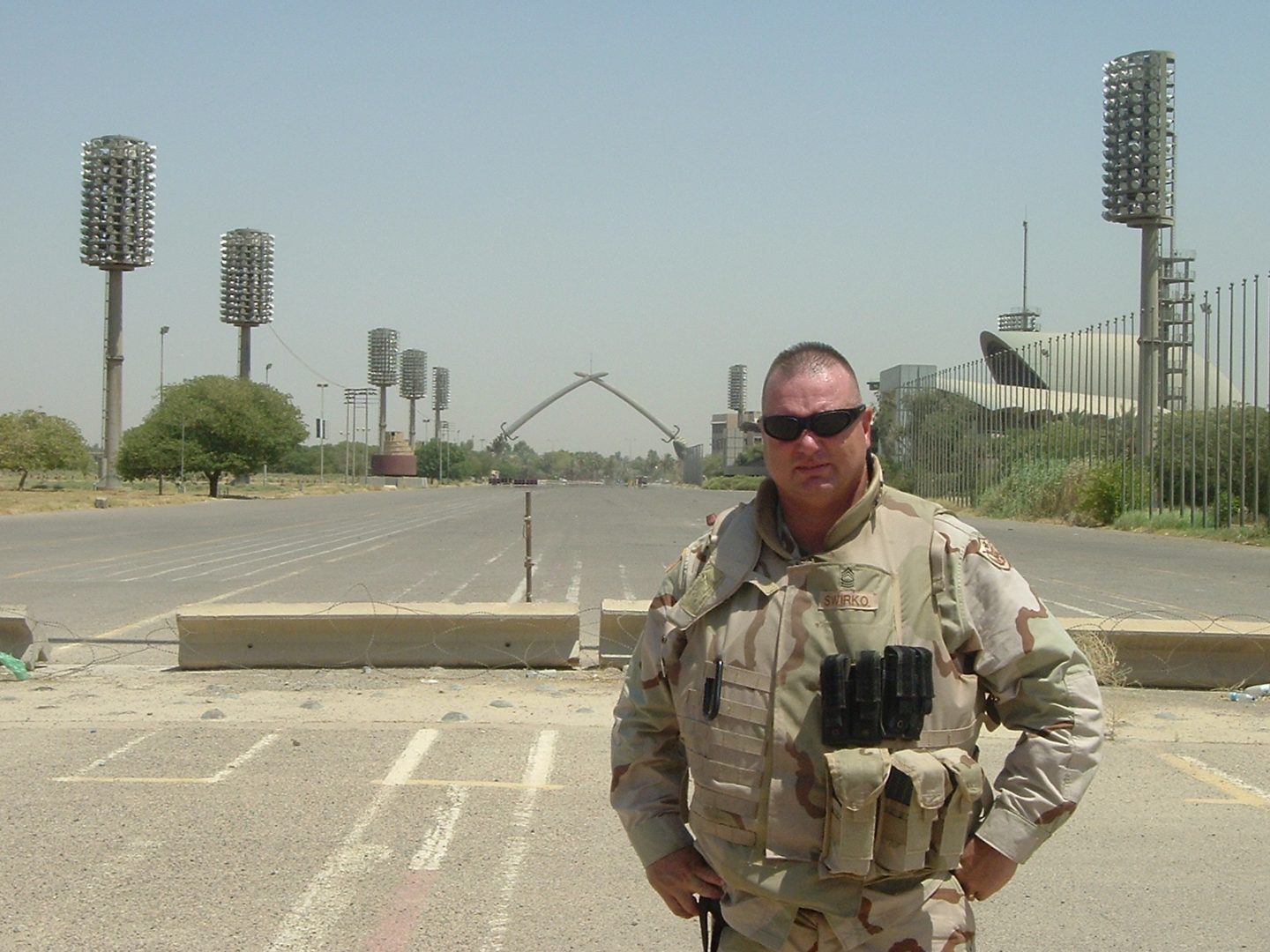
By Detective (Retired) Martin Swirko Manchester NH Police Department
“How ya doin?’ I asked in a sheepish but friendly voice as I stepped into the elevator. It was my first week on the street after completing two police academies and I was headed to Roll Call. The cop who rode the elevator with me had more than a few years on the job. He shot me a dirty look then returned my greeting:. “GO FUCK YOURSELF, ROOKIE!” I was both stunned and speechless. “After all” I asked myself. “Aren’t I one of them now?’ We rode the rest of the way up on the elevator in silence. Looking back on it, that moment should have clued me in that the Brother and Sisterhood of the badge I had always heard about may not have been all it was cracked up to be. I learned a short time later that the cop’s name was Charlie Queen. Charlie worked the 6PM-230AM shift and his steady assignment was to patrol car 26X.
As I got to know Charlie in the weeks that followed, I just tried to stay out of his way despite working the same shift. As I settled in to my new job, just to irritate him, I would occasionally try to speak to him. My greeting him never failed to cause him to answer me in an insulting way. He never failed to finish whatever string of barbs he threw my way with the word ROOKIE! With a verbal exclamation point! The one word that was emphasized whenever he responded to my greetings was always ROOKIE. And when Charlie used it, it was not a term of endearment or camaraderie. He kind of spat the word out while at the same time emphasizing it. I got the impression that Charlie regarded rookie cops as the lowest human form. After a while I would just chuckle and admire his ability to make his snubs towards me sound like a brief poetic recital. Closer to Poe rather than Rod McKuen.
One day, some months later, I was silently riding up the elevator again with Charlie when Glen Kramer joined us. Charlie greeted Glen with a friendly “How ya doin?”. Glen said nothing. We all got off the elevator together and Charlie made some comment about Glen being rude and ignoring him. Charlie asked “What the hell is wrong with you today?” Glen stopped, turned and faced Charlie and then responded:
“I’ve worked here for ten years and all that time you never spoke to me. Today you say HI. I’m supposed to do a tap dance now? YOU can go Fuck YOURSELF!” Charlie was stunned and I thought it was hilarious! Charlie walked away muttering a few choice words. I actually thought I detected a smirk on Charlie’s face.
As for me, I’d see Charlie doing a traffic detail somewhere and I’d slow down and ask him if needed anything and I always got the same answer. “Keep moving rookie. Get the hell out of here!” I’d just smile, salute him smartly and move on. That was Charlie Queen. I learned not to take him too seriously, but I never really wanted to work with him.
Not long after being led loose on my own, I was sent to my first attempted suicide call. Someone had called MPD to report that a friend of theirs had called and told that person she was going to end it all and had taken pills. Charlie Queen was also sent to back me up on the call. “Oh great!” I thought once I heard that 26X was assigned to my call. “On top of this, I have to deal with Charlie now”
Of course, not surprisingly, when he arrived he ignored me, same as always. We entered the address together and we located the suicidal subject. I figured her age to be late 20’s, early 30s at the most. She was seated in a sofa chair in her living room. A quick look around told me that the apartment was clean, organized, photos and nick-knacks displayed all around. I formed an over all impression that she at least had a decent place to live.
However, she was very distraught and not very talkative. Since I was the primary unit assigned to the call, I took the lead. Charlie stood off to the side, looking a little bored but still taking everything in. I’d never talked with a suicidal person before, so I clumsily I tried to converse with her. I attempted to get her to tell me her name, anything, but she was pretty much uncommunicative. I wanted to establish a rapport with her but I got no where. Meanwhile, Charlie knew what to look for and quickly found an empty prescription bottle on the floor. Based on the date it had been filled, he figured she probably ingested close to the entire bottle of pills. This was a serious suicide attempt. If we didn’t get her to a hospital soon, she would surely die.
While I was trying to talk with her, I tried to get her to tell us what she did and why she did it. We were also trying to convince her to go to the hospital. Since she was conscious, at the time, there was no law that allowed us to force her to get medical help. No ambulance would take her out against her will. Beyond that, I’d never seen any manual, any set of instructions on how to deal with this situation. I was making it up as I went along. Legally, we just couldn’t grab her forcibly and take her to the hospital unless she consented. That would change later during my career. As hard as I tried, I was getting nowhere with her.
Suddenly, Charlie kind of nudged me aside and walked over to where this young lady was sitting. He then did something that astonished me. He actually got down onto his knees, and started to talk to her as thought they were the only two people in the room. In a calm and soothing voice he tried to convince her that she had much to live for. He wasn’t leaning down over her, his face was on the same level as his face. He violated one of police work’s most basic axioms: Never allow anyone you deal with to get within your personal space. If she suddenly decided to assault or otherwise harm Charlie, he’d be defenseless.
Charlie went to work. He told her she was young, she had a long life ahead of her. He would never allow her to throw her life away in this fashion. She has so much to live for and she just doesn’t realize it right now.
The she tearfully responded telling Charlie that she had no one, not one person in the world who cared about her. She was alone. I would find this to be a common theme during my career whenever I dealt with suicidal subjects that were still alive when I got to them. Charlie told her she was wrong. Someone cared enough to call the police to help her for her and so on.
I was awestruck to see the display of compassion Charlie showed for this young woman. A stranger. Someone he had never met before. I thought perhaps Charlie actually cared about this young lady and what would happen to her. I learned a lot about Charlie Queen that day. He actually demonstrated what compassion meant for a police officer, and because of that, I never looked at him the same way again.
Eventually, after what seemed like an eternity, he prevailed, and without much help from me, I might add. The pitiful woman reluctantly agreed to go to the hospital. We took her to Catholic Medical Center which was her choice. When I left the hospital, I was very proud and full of myself. After all, I was able to help this woman and possibly saved her life. It’s all about helping people, right? I knew I had chosen the right profession.
I took my notes, cleared the hospital knowing at some point that night I’d have to write a report on the incident. At one point there was a lull during the shift. When it slowed down, I decided to back to the ER to check on her. The staff said she was doing better, and said I could go back to see her. I wanted to say HI and tell her I was worried about her and happy she decided to go to the hospital. I was glad she was feeling better.
When I saw her, she gave me a very cold stare, then after I spoke to her for a few minutes, it was her turn to thank me. Instead, she told me that life is too painful for her to continue. She said all she wanted to do was go to sleep peacefully, never have to wake up and not have to feel the pain anymore. She asked me why I didn’t let her do that. She then made the following statement to me, which I have never forgotten: “I hate you for what you did to me. Leave me alone.”
I was stupefied. I certainly had no answer for her. She clearly wanted nothing to do with me. I believed at the time she truly hated us for what we had done. Suddenly it felt like the walls were closing in on me. I had to escape. A myriad of emotions flooded my mind simultaneously. Confusion, humiliation and embarrassment. I sensed (or imagined) dozens of eyes belonging to staff members drilling into me, eagerly waiting for my reaction.
I awkwardly back pedaled away from her. Then I turned and tried to slither unnoticed back to the safety of my cruiser. Inside I locked the doors and exhaled. This was certainly an eye opener for me. I was shocked at the lack gratitude she had shown me for saving her life. In the months that followed, I would be shocked even more when I regularly saw the capacity people had for harming themselves or others.
But I also learned that night hadn’t been about me or what I imagined I accomplished. It was about her, and about what the best thing I could have possibly done for that woman at that moment. Legally, ethically and morally. I could hope to do no more. That, would have to be enough.
I sat for a bit, and after a few minutes I picked up my radio mike and pronounced: “20X is back in service.” There was no more time to brood or assuage my deflated ego. I was immediately sent to my next call. I detected a hint of sarcasm in the dispatcher’s tone as though she wanted to tell me “It’s about time” or “thank you for joining us”. I quickly shook off the funk I had found myself in and headed for my next adventure, or perhaps my next lesson in life. I know it’s a cliche, but I was learning that not only did I have a ring side seat to what might be the greatest show on earth, but I would often find myself being an active participant in that show. And no, I would never save the world. But maybe, occasionally, I could help a person. That would have to be enough.